
.svg)

Australia is on the brink of the biggest demographic wave we have ever experienced. In just 30 years, twice as many of us will be over the age of 65 and our nation will look fundamentally different.
This week, I attended the launch of the 2026 State of the Older Nation (SOTON) report at the National Press Club, with an insightful keynote from Council on the Ageing Chair, the Hon. Christopher Pyne.
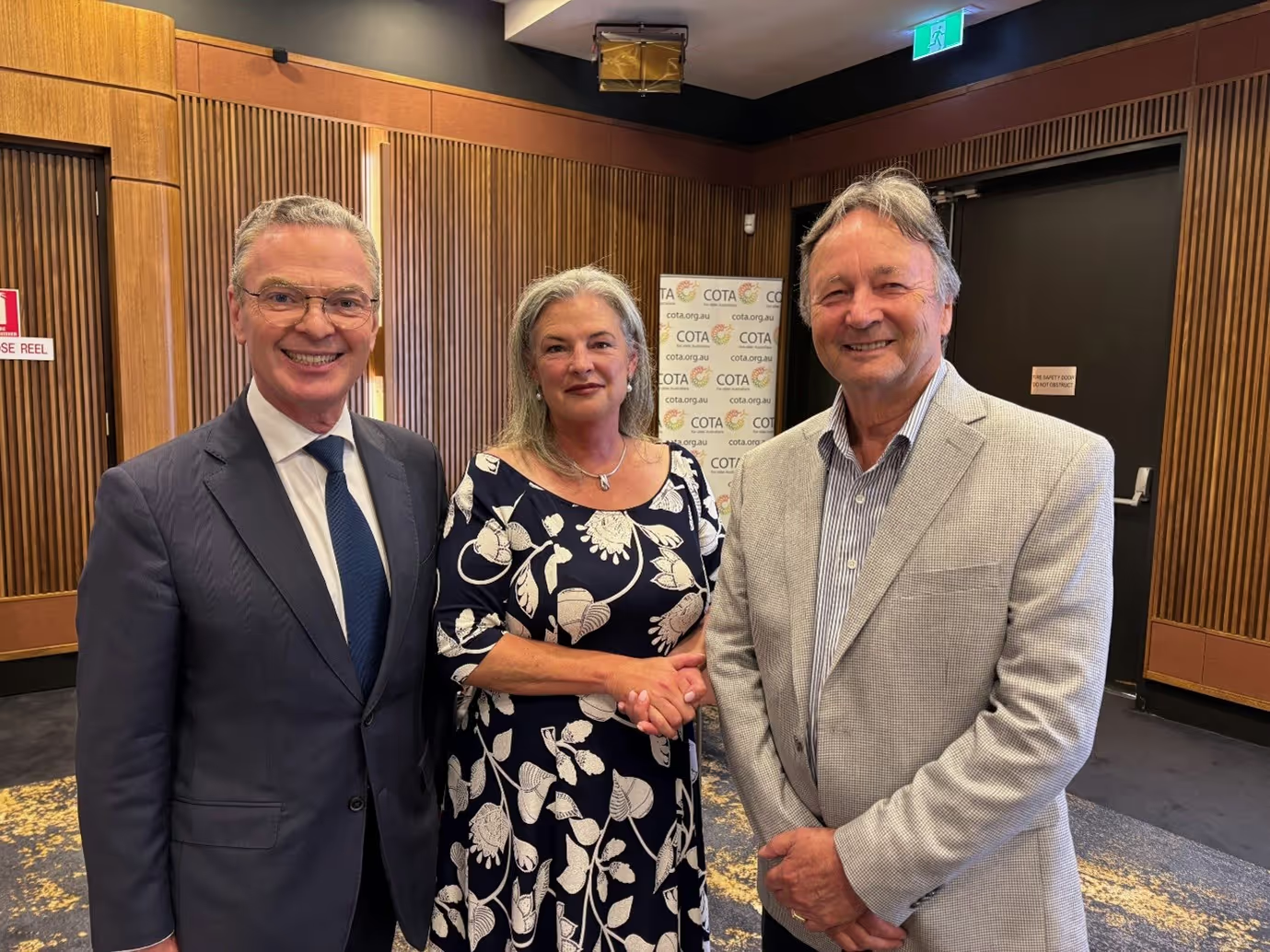
The fourth SOTON survey delivers a clear warning that older Australians are not a single cohort all living the same experience. They are a diverse group of individuals whose financial circumstances, health, cultural backgrounds, aspirations and housing preferences are profoundly different.
It is hardly surprising that the next wave of retirees will be fiercely protective of their independence and unwilling to go quietly into institutionalised models of care. After all, the report is talking about us — the Australians currently in the workforce and their adult children.
While many of us expect to downsize before our health deteriorates and budgets tighten, today's older Australians are also demanding greater choice. They want homes in the neighbourhoods they know, communities that keep them socially connected, and built-in services that can flex and grow as their support needs change. Almost 70 per cent still want a standalone home — reminding us that one-size-fits-all apartment living will not meet the needs of a generation that is used to designing its own lifestyle.
Our community risks falling dangerously behind if we continue to treat ageing as a uniform condition rather than a complex, multi-decade life stage.
The right housing supply, neighbourhood design, transport networks and access to everyday services will determine whether Australians can stay connected, productive and independent for longer. While much of that burden naturally falls on healthcare and social services, the planning and development industry has a pivotal role to play.
If Australia wants to ride this demographic swell rather than be dumped in its wash, now is the time to act. That means building more elasticity into our urban planning and design frameworks. Retirement housing has traditionally been treated as a niche product confined to discrete zones with narrowly defined housing styles and typologies. That approach no longer reflects the scale of our ageing population, or the diversity of choice older Australians are looking for.
The next generation of communities must be regenerative by design — neighbourhoods that enable people to age in place, stay economically and socially active, and draw energy and wellbeing from a healthy environment.
For Canberra, our nation's capital, the opportunity and responsibility is particularly acute. We are uniquely positioned to set a new standard in how cities redesign for a better life, proving that our ageing population is not a burden to be managed, but the inspiration for more inclusive, resilient and human-scale urbanism.