
.svg)

The hardest thing to create in a new community isn't the buildings, the infrastructure, or even the landscape. It's the sense of identity and the feeling that a place belongs in the country around it.
Walk through almost any new subdivision and you'll find placemaking gestures — themed entry statements, feature walls referencing local history, street names borrowed from the past, artworks nodding at Country. All of this is an effort to create a distinctive character and a story that will emotionally connect people to the location.
This unique sense of identity and place is hard to manufacture because it evolves over time, through use and memory and the rich layers of human life. It is a mantle that older places wear effortlessly.
The understanding of identity and how it comes about is at the heart of regenerative development. Rather than starting from a blank slate and trying to build meaning into a place, regenerative design asks what a place already embodies and works to enhance and build on that. Landscape, ecology and cultural layers combine with the history of the people who have lived, worked and cared for a site, to create a tapestry that is living and unique.
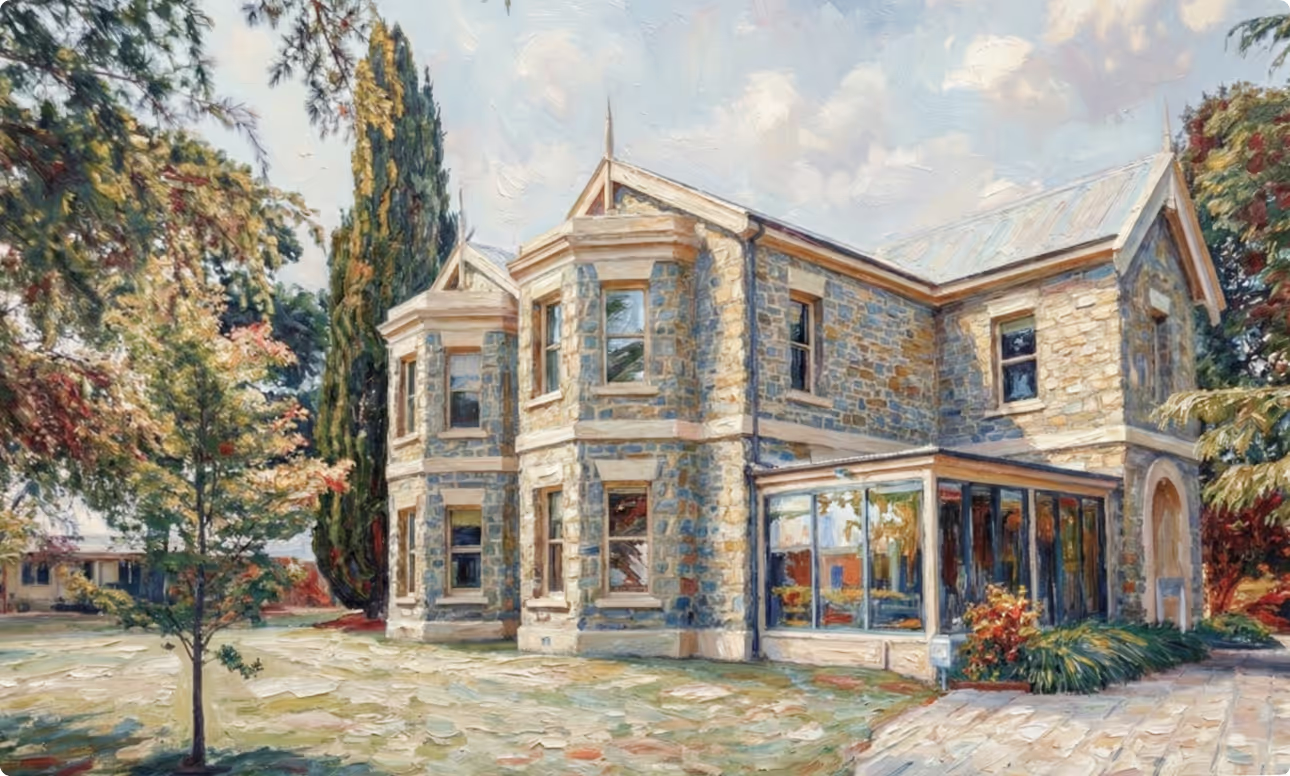
Gungahlin Homestead is a prime example. It has been part of the Canberra regional landscape for 180 years. It sits on Ngunnawal Country that has existed for tens of thousands of years. The property has been a Colonial pastoral estate, a home for landed gentry, the centre of social life, an educational boarding house and a scientific research station. Aboriginal cricketers were included in the local team that played there back in the 1800s. It hosted the region's first private telephone. Generations of researchers documented Australian wildlife from its grounds and outbuildings. Every one of those layers is still present in the fabric of the original buildings, the century-old trees lining the driveway, and the landscape that surrounds it.
Preserving heritage is often considered a complication for development to work around. In truth, it is an extraordinary asset and opportunity. It is precisely what makes a regenerative approach to urban design not just desirable, but necessary. A conventional development can spend decades and big budgets trying to recreate a sense of place that already exists when you embrace the country you are on.
Consider what a heritage site carries before a single design decision is made — the ecology that shaped how people used the land, the cultural knowledge embedded in the landscape, the stories of the communities who lived and worked there across generations. Every one of those layers is an asset, even if that layer, such as the original ecology, no longer exists. A regenerative approach treats these elements as primary design inputs, not as constraints to manage, conservation areas to fence off, or period details to reference on a signboard.
At Gungahlin Homestead Estate in Canberra, this is the foundation of everything. A 200-year-old property on Ngunnawal Country, with a history running from pastoral estate through scientific research station, sits at the centre of the masterplan not as a museum piece but as the living community hub. That history isn't decoration. It's the reason the place has value, meaning and a unique appeal.